phone: +974 4 409 5443 | 50024300
email: [email protected]
SHOP NUMBER 1,BUILDING NUMBER 2,BARWA VILLAGE,WAKRA

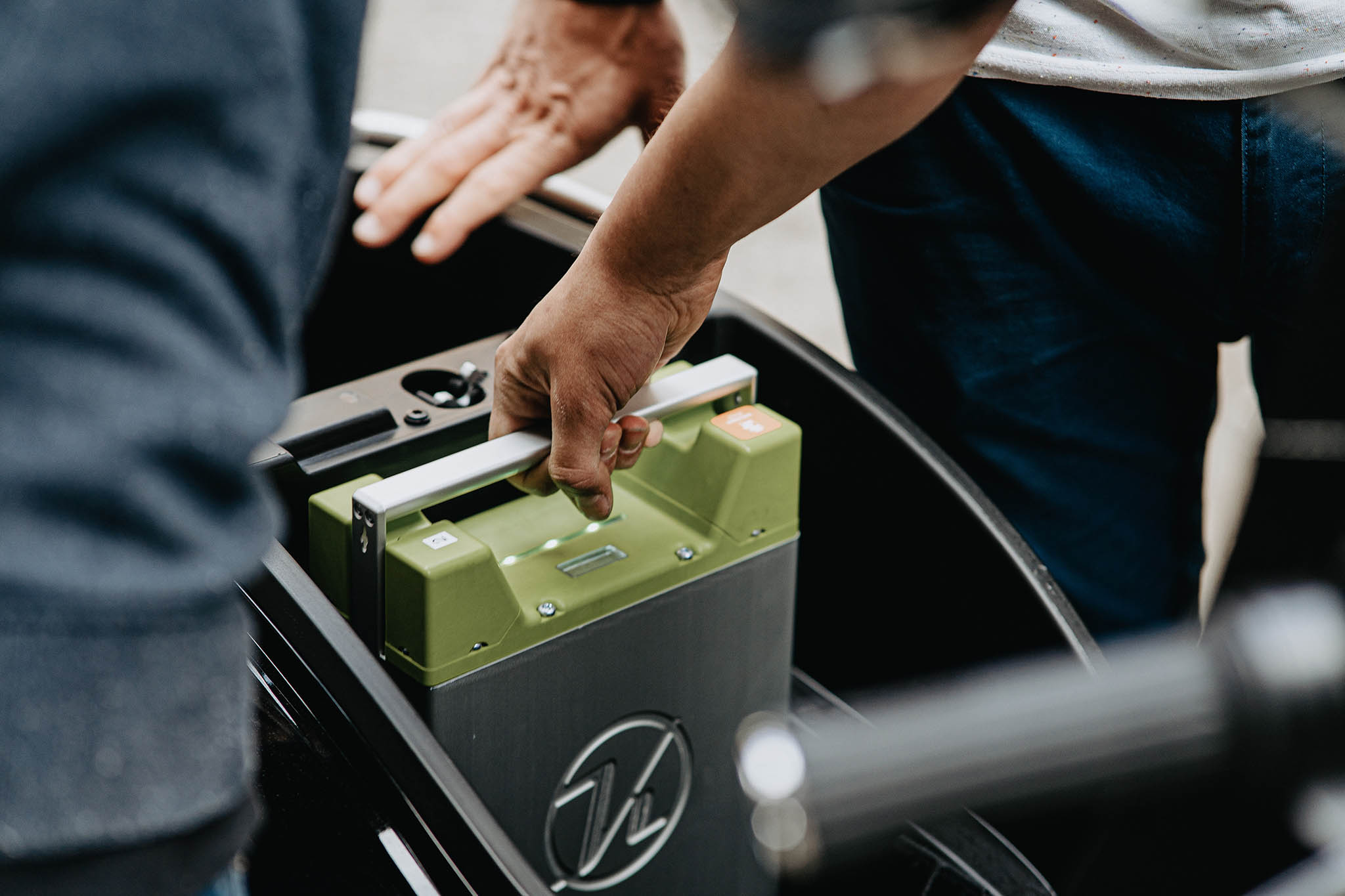
Battery Types in Solar Lights: Why Lithium Battery Solar Lights Are the Best Choice
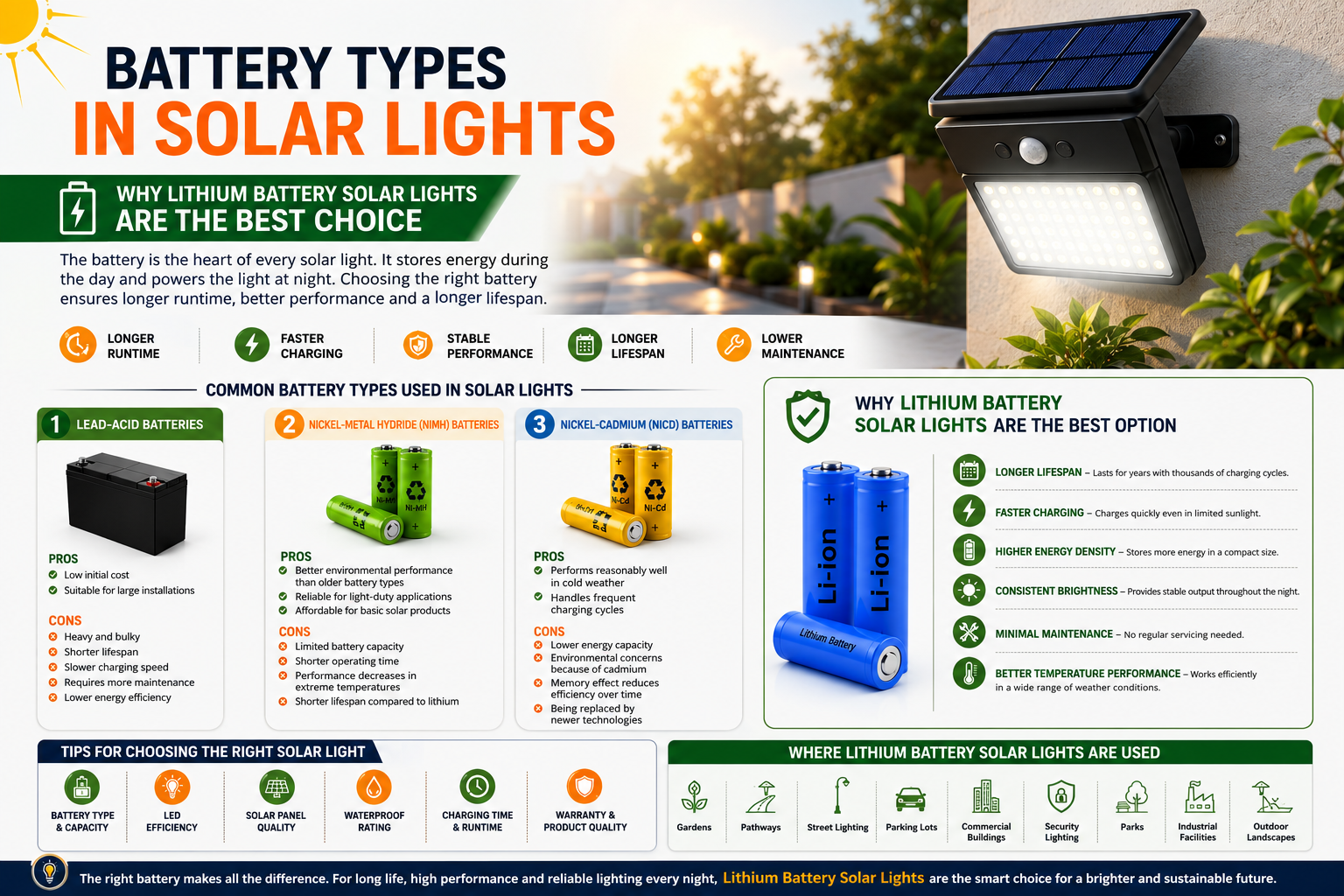
Battery Types in Solar Lights: Why Lithium Battery Solar Lights Are the Best Choice
Solar lighting has become one of the most practical and energy-efficient solutions for homes, businesses, streets, gardens, and commercial spaces. While people often focus on the brightness of the LED or the size of the solar panel, the battery inside the light is just as important. It determines how long the light operates, how quickly it charges, and how many years it will last.
Different solar lights use different battery technologies, and each comes with its own advantages and limitations. Among all available options, Lithium Battery Solar Lights have become the preferred choice because of their excellent performance, durability, and efficiency.
In this guide, we'll explore the common battery types used in solar lights and explain why lithium batteries have become the industry standard.
Why the Battery Matters in Solar Lights
The battery is the heart of every solar lighting system. During the day, the solar panel converts sunlight into electricity and stores that energy in the battery. At night, the stored energy powers the LED light.
A high-quality battery provides:
- Longer lighting hours
- Faster charging
- Stable brightness
- Longer service life
- Better performance during cloudy weather
- Lower maintenance requirements
Choosing the right battery ensures your solar light continues to perform reliably throughout the year.
Common Battery Types Used in Solar Lights
1. Lead-Acid Batteries
Lead-acid batteries have been used for decades in larger solar power systems. They are affordable and capable of storing large amounts of energy.
Advantages
- Low initial cost
- Suitable for large solar installations
- Widely available
Limitations
- Heavy and bulky
- Shorter lifespan
- Requires more maintenance
- Slower charging speed
- Lower energy efficiency
Because of these drawbacks, lead-acid batteries are becoming less common in modern solar lighting.
2. Nickel-Metal Hydride (NiMH) Batteries
NiMH batteries are commonly found in smaller garden lights and decorative solar lamps.
Advantages
- Better environmental performance than older battery types
- Reliable for light-duty applications
- Affordable for basic solar products
Limitations
- Limited battery capacity
- Shorter operating time
- Performance decreases in extreme temperatures
- Shorter lifespan compared to lithium batteries
3. Nickel-Cadmium (NiCd) Batteries
NiCd batteries were once widely used in solar lights due to their durability.
Advantages
- Performs reasonably well in cold weather
- Handles frequent charging cycles
Limitations
- Lower energy capacity
- Environmental concerns because of cadmium
- Memory effect reduces efficiency over time
- Being replaced by newer battery technologies
Today, NiCd batteries are rarely used in premium solar lighting products.
Why Lithium Battery Solar Lights Are the Best Option
Modern solar lighting systems increasingly rely on Lithium Battery Solar Lights because lithium technology offers superior performance in almost every aspect.
Longer Lifespan
Lithium batteries can last several years with proper use. They support thousands of charging cycles, making them an excellent long-term investment.
Faster Charging
Lithium batteries absorb energy more efficiently, allowing them to charge faster during daylight hours. Even on cloudy days, they can store energy effectively.
Higher Energy Density
Lithium batteries store more energy in a compact size. This allows manufacturers to create smaller, lightweight solar lights without sacrificing runtime.
Consistent Brightness
Unlike older battery technologies that gradually lose brightness as power decreases, lithium batteries provide stable output, helping lights maintain consistent illumination throughout the night.
Minimal Maintenance
Lithium batteries require very little maintenance. There is no need for regular servicing, making them ideal for residential, commercial, and outdoor installations.
Better Temperature Performance
High-quality lithium batteries perform well in a wide range of weather conditions, making them suitable for different climates.
Where Lithium Battery Solar Lights Are Commonly Used
Because of their reliability and long operating life, Lithium Battery Solar Lights are used in many applications, including:
- Residential gardens
- Pathway lighting
- Street lighting
- Parking lots
- Commercial buildings
- Security lighting
- Public parks
- Industrial facilities
- Outdoor landscape lighting
Their dependable performance makes them a trusted choice for both small and large-scale projects.
Tips for Choosing the Right Solar Light
Before buying a solar light, consider the following:
- Battery type
- Battery capacity
- LED efficiency
- Solar panel quality
- Waterproof rating
- Charging time
- Expected runtime
- Warranty and product quality
A good solar light combines an efficient solar panel, high-quality LEDs, and a reliable battery for the best overall performance.
Final Thoughts
The battery plays a vital role in determining the efficiency and lifespan of any solar lighting system. While lead-acid, NiMH, and NiCd batteries are still available in certain applications, modern lighting solutions increasingly depend on Lithium Battery Solar Lights because they offer longer life, faster charging, better energy storage, and consistent illumination.
If you're planning to invest in solar lighting, choosing Lithium Battery Solar Lights is a smart decision for long-term reliability and energy savings. With their advanced technology, low maintenance, and dependable performance, Lithium Battery Solar Lights continue to set the benchmark for efficient outdoor lighting solutions.