phone: +974 4 409 5443 | 50024300
email: [email protected]
SHOP NUMBER 1,BUILDING NUMBER 2,BARWA VILLAGE,WAKRA

How LED Lights Reduce Energy Consumption
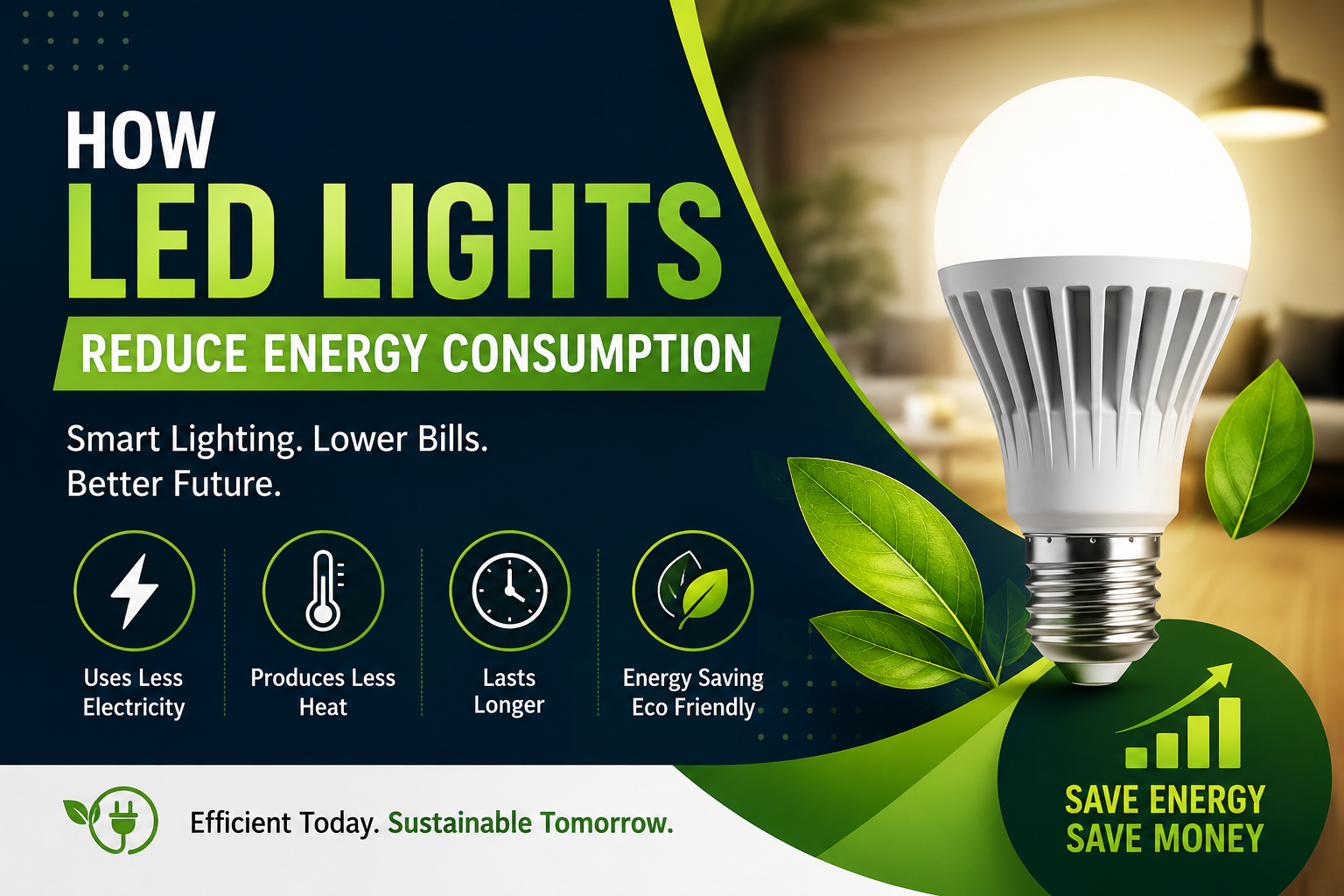
How LED Lights Reduce Energy Consumption
How LED Lights Reduce Energy Consumption
LED lighting has become a popular choice for homes, offices, shops, warehouses, and industrial spaces because it provides bright, reliable illumination while using less electricity.
Understanding led lights energy consumption can help you choose better lighting and reduce unnecessary energy costs.
How Do LED Lights Reduce Energy Consumption?
LED lights reduce energy consumption by producing more light with less electrical power compared with traditional incandescent bulbs. They use semiconductor technology to generate light efficiently and produce less wasted heat.
For example, a traditional 60W incandescent bulb can often be replaced by an LED using around 8–10W for a similar level of brightness. The exact power requirement depends on the LED's light output and efficiency.
LED Lights vs Traditional Bulbs
| Lighting Type | Approx. Power | Typical Output |
| Incandescent | 60W | ~800 lumens |
| CFL | 13–15W | ~800 lumens |
| LED | 8–10W | ~800 lumens |
This shows why LEDs can significantly reduce electricity usage while maintaining similar brightness.
Why Are LEDs Energy Efficient?
Lower Wattage
LEDs can produce the required brightness using considerably less power than incandescent bulbs.
Higher Efficiency
LED efficiency is often measured in lumens per watt (lm/W). A higher lm/W value means more light is produced for each watt of electricity used.
Longer Lifespan
Quality LED products can operate for many thousands of hours, reducing the need for frequent replacements and maintenance.
Smart Controls
LEDs can work with motion sensors, timers, occupancy sensors, and dimmers. These controls can prevent lights from operating when they are not needed.
How Much Electricity Does an LED Use?
A 10W LED operating for 5 hours uses:
10W × 5 hours = 50Wh = 0.05 kWh
If used for five hours every day, it would consume approximately 18.25 kWh per year.
Actual consumption depends on the LED's wattage and how long it operates.
How Can You Reduce LED Energy Consumption Further?
You can improve lighting efficiency by:
- Choosing the correct lumen output
- Selecting LEDs with good lm/W efficiency
- Turning lights off when they are not needed
- Using motion or occupancy sensors
- Using dimming where appropriate
- Taking advantage of natural daylight
- Choosing quality LED products
Frequently Asked Questions
Do LED lights use less electricity?
Yes. LEDs generally use less electricity than incandescent bulbs to produce comparable light output.
Does lower wattage mean better LED efficiency?
Not necessarily. Compare wattage with lumen output. Lumens per watt provides a better indication of lighting efficiency.
Can LED lights reduce electricity bills?
Yes. Because LEDs generally consume less power, replacing inefficient lighting can reduce lighting-related electricity costs.
Do LED lights last longer?
Yes. Many quality LED products are designed to operate for tens of thousands of hours, although actual life depends on product quality and operating conditions.
Conclusion
LED lights are an effective way to reduce electricity consumption while maintaining good lighting performance. Their low power requirements, high efficiency, long lifespan, and compatibility with smart controls make them suitable for both residential and commercial applications.
By understanding led lights energy consumption and choosing the right wattage, brightness, and efficiency, you can create a lighting system that uses energy more effectively and helps reduce long-term operating costs.
Other Blogs: