phone: +974 4 409 5443 | 50024300
email: [email protected]
SHOP NUMBER 1,BUILDING NUMBER 2,BARWA VILLAGE,WAKRA

How Solar Street Lights Work: Complete Guide to Solar-Powered Outdoor Lighting
How Solar Street Lights Work: Complete Guide to Solar-Powered Outdoor Lighting
Solar-powered lighting is becoming an increasingly practical solution for roads, pathways, parking areas, residential communities, industrial sites, campuses, and public spaces. But how does a solar-powered lighting system actually work?
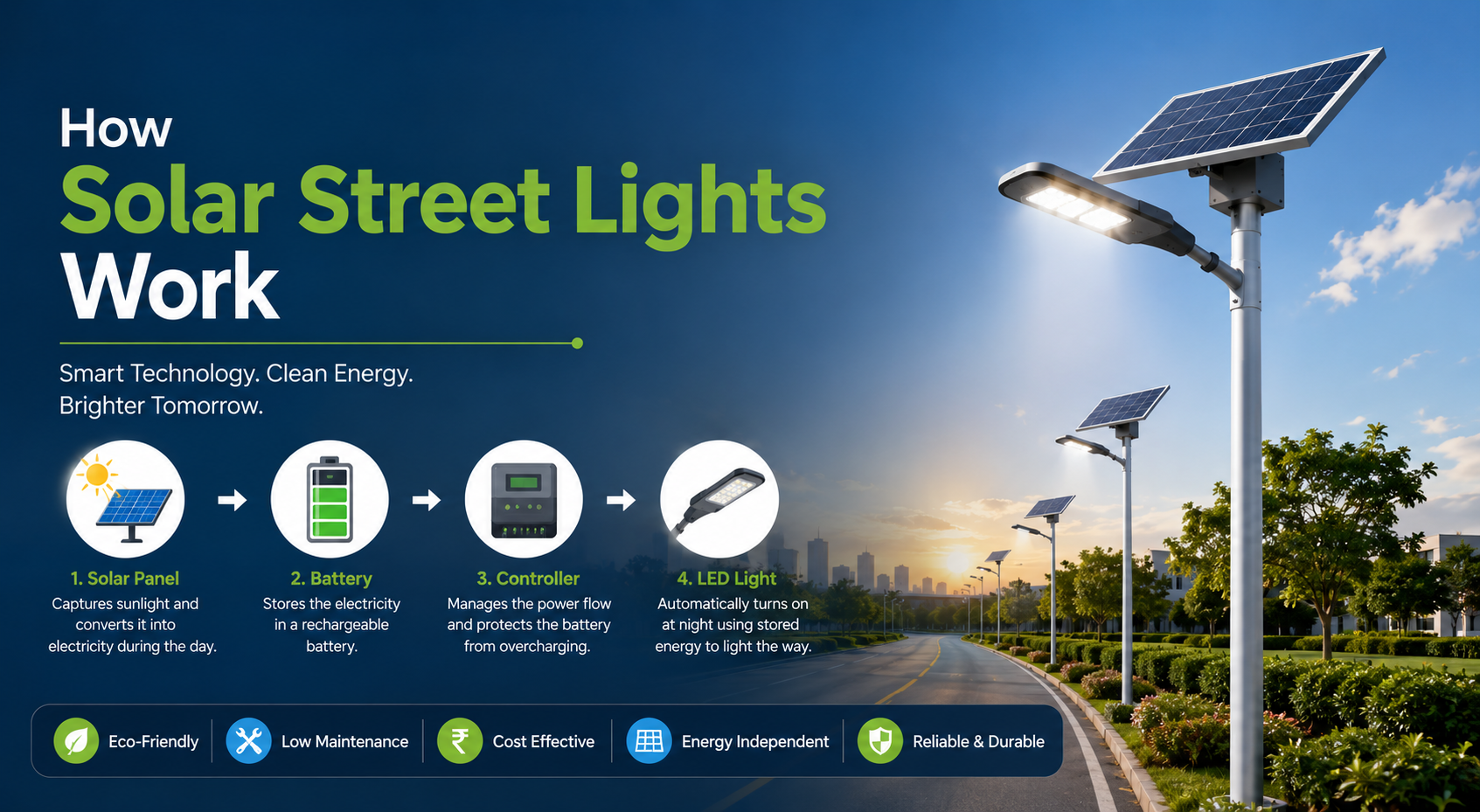
The process is simple: sunlight is converted into electricity, the electricity is stored in a rechargeable battery, and the stored energy powers an LED light after sunset.
This guide explains the working principle, components, benefits, applications, maintenance requirements, and important factors to consider when selecting a solar-powered street lighting system.
What Are Solar Street Lights?
Solar Street Lights are outdoor lighting systems that use solar energy to power LED luminaires. Instead of relying on a continuous connection to the electrical grid, a typical standalone system generates electricity during the day and stores it in a battery for use at night.
A complete system generally includes:
- Solar photovoltaic panel
- Rechargeable battery
- LED lighting fixture
- Solar charge controller
- Pole and mounting structure
- Sensors or intelligent controls, depending on the model
These systems are commonly used for streets, pathways, parking lots, parks, campuses, rural roads, and other outdoor areas.
How Do Solar Street Lights Work?
The working principle can be explained in four main steps:
Sunlight → Solar Panel → Battery Storage → LED Illumination
1. Solar Panel Converts Sunlight into Electricity
During daylight hours, the photovoltaic cells in the solar panel absorb sunlight and convert solar energy into electrical energy.
The amount of electricity generated depends on several factors, including:
- Solar panel efficiency
- Panel capacity
- Sunlight intensity
- Weather conditions
- Panel orientation
- Installation location
- Available daylight hours
The generated electricity passes through the charge controller before being stored in the battery.
2. Battery Stores the Solar Energy
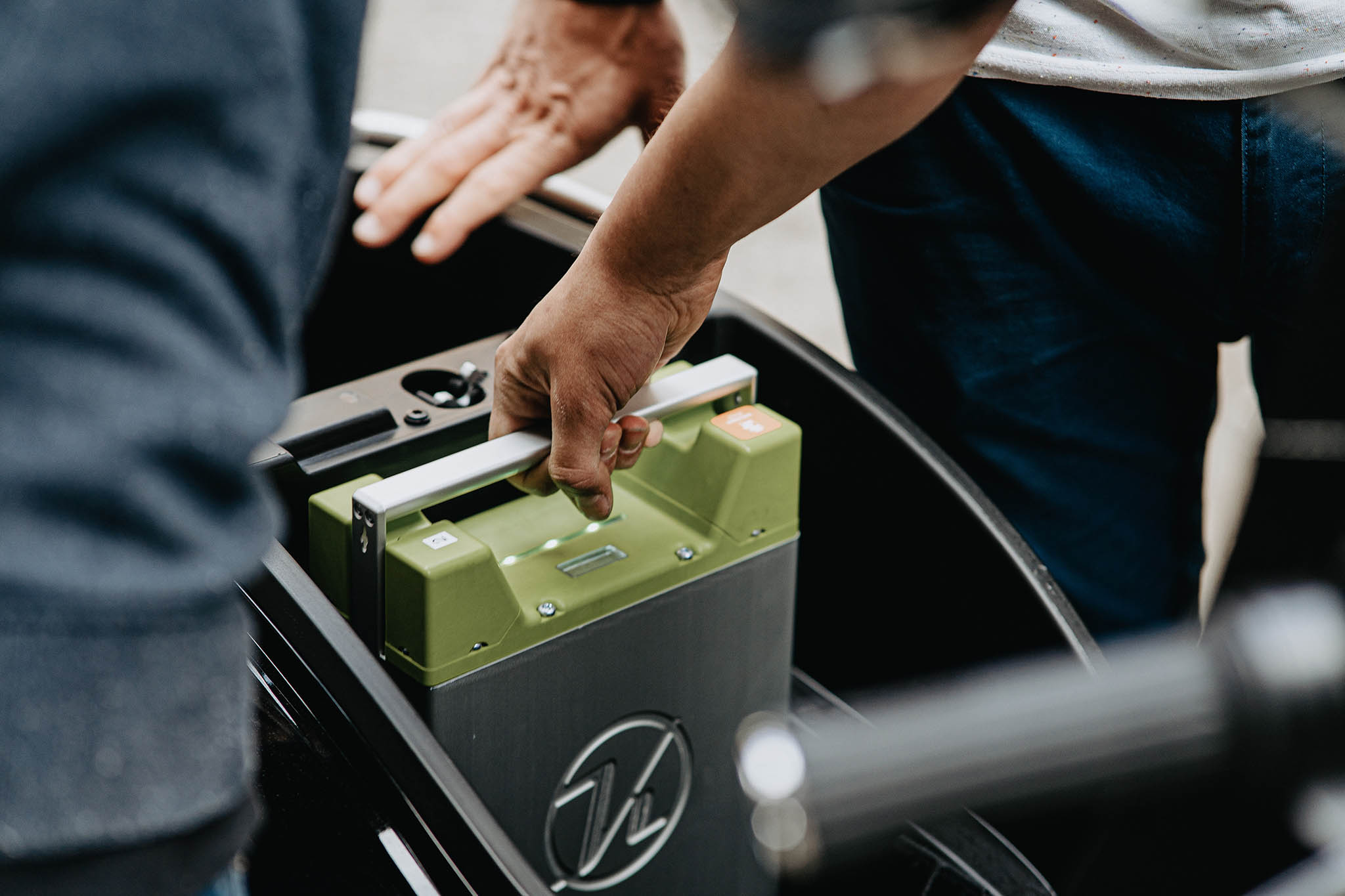
The rechargeable battery stores the electricity generated during the day.
At night, when the solar panel is no longer producing useful power, the stored energy becomes the primary power source for the LED fixture.
Battery capacity is an important consideration because it influences how long the lighting system can operate after sunset and how well it can handle periods of reduced sunlight.
Modern systems may use lithium-based battery technologies because of their energy density, charging performance, and compact design.
3. Controller Manages Energy Flow
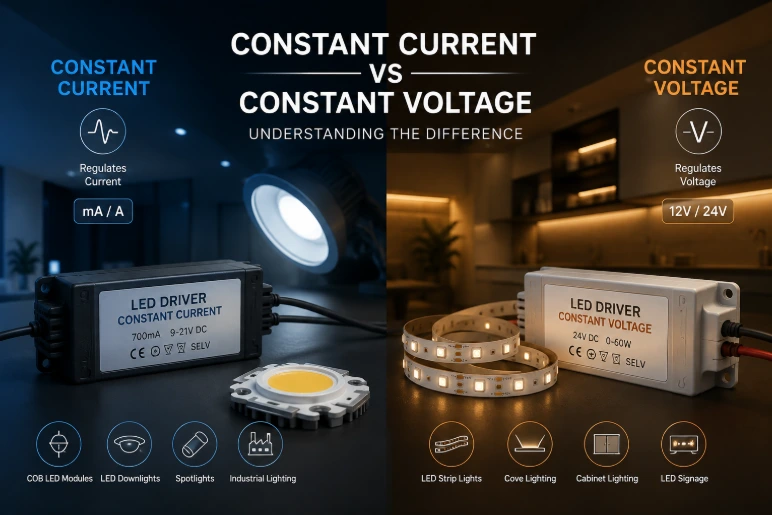
The solar charge controller manages the flow of electricity between the solar panel, battery, and LED fixture.
Depending on the system, the controller can:
- Regulate battery charging
- Prevent overcharging
- Protect against excessive discharge
- Control automatic switching
- Adjust LED brightness
- Manage lighting schedules
- Support intelligent lighting functions
The controller therefore plays an important role in protecting the system and managing its daily operating cycle.
4. LED Fixture Produces Light
After sunset, the controller supplies stored battery power to the LED luminaire.
The LED converts electrical energy into visible light and illuminates the required area.
Because LEDs generally provide high light output with relatively low power consumption, they are well suited to solar-powered outdoor lighting applications.
How Do Solar Lights Know When to Turn On?
Most modern systems use a light sensor, timer, or intelligent controller to determine when the LED should operate.
During the day, the system detects sufficient ambient light and keeps the LED switched off while the battery charges.
As the surrounding light level decreases in the evening, the controller activates the LED fixture.
In the morning, increasing daylight signals the system to switch the LED off and begin another charging cycle.
Some advanced systems can also use programmable schedules, motion sensors, or adaptive dimming.
What Happens on Cloudy or Rainy Days?
Solar-powered lighting can continue operating during cloudy or rainy weather because the battery provides stored energy.
However, cloudy conditions can reduce the amount of electricity generated by the solar panel. Several consecutive days with limited sunlight may therefore affect battery charging and nighttime operating time.
For reliable performance, system designers should consider the local solar resource, required operating hours, battery capacity, panel capacity, and desired backup duration.
This is particularly important when installing systems in regions with seasonal variations in sunlight.
What Are the Main Components?
Understanding the main components makes it easier to evaluate a solar lighting system.
Solar Photovoltaic Panel
The panel converts sunlight into electrical energy. Its size and efficiency influence how much energy can be generated during the day.
Rechargeable Battery
The battery stores generated energy for nighttime use. Its capacity and technology influence operating duration, backup capability, and system performance.
LED Luminaire
The LED fixture provides illumination. Important specifications include:
- Lumen output
- Wattage
- Beam angle
- Color temperature
- Optical distribution
- Operating life
Charge Controller
The controller regulates energy transfer and provides battery protection. Some integrated systems combine the controller with other electronic components.
Pole and Mounting Hardware
The pole supports the lighting fixture and solar panel at the appropriate installation height. Structural strength is especially important in locations exposed to strong winds.
Sensors and Smart Controls
Depending on the model, sensors can detect daylight or movement. Smart controls may automatically reduce brightness during low-traffic periods and increase it when activity is detected.
Why Are LEDs Used in Solar Lighting?
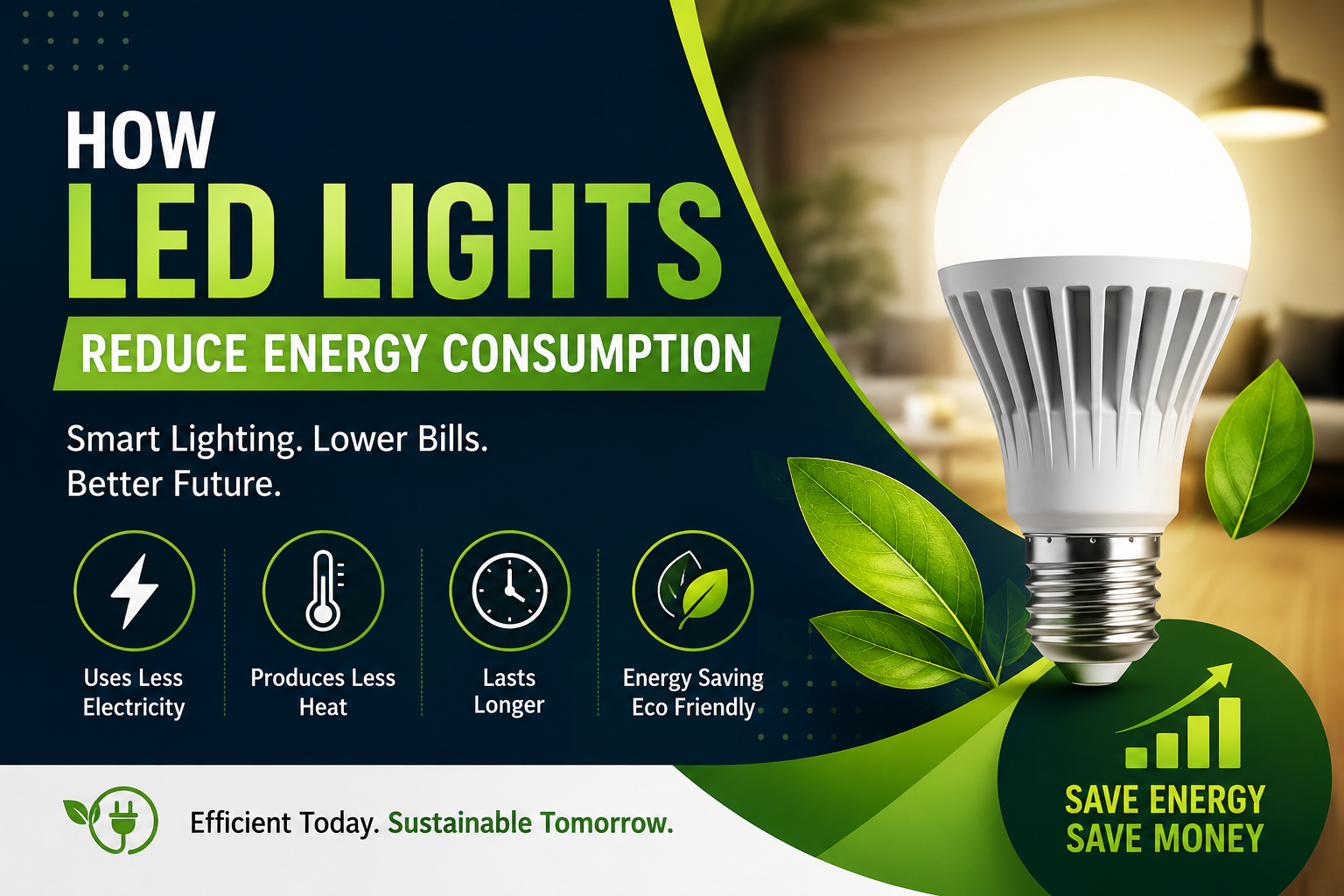
LED technology is particularly suitable because it can provide effective illumination while consuming comparatively little electrical power.
Major advantages include:
- High energy efficiency
- Long service life
- Low power consumption
- Instant illumination
- Directional light distribution
- Reduced maintenance requirements
Lower electrical consumption also helps reduce the amount of stored energy required for nighttime operation.
What Are the Benefits of Solar-Powered Street Lighting?
The main advantages include:
Reduced Grid Dependence
Standalone systems can operate without a continuous grid connection, making them useful where conventional electrical infrastructure is limited.
Lower Electricity Consumption
The lighting system generates its operating energy from sunlight rather than continuously drawing electricity from the grid.
Easier Installation in Remote Areas
Where extending electrical cables is difficult or expensive, locally generated solar power can provide a practical alternative.
Renewable Energy Source
Solar energy is renewable and can be used to power outdoor lighting without directly consuming conventional grid electricity during operation.
Flexible Applications
Systems can be installed in locations ranging from residential communities to rural roads, commercial properties, parks, and industrial areas.
Reduced Cable Infrastructure
Standalone systems may reduce the need for extensive underground electrical cabling, depending on the project design.
Where Can Solar Street Lighting Be Used?
Common applications include:
- Residential roads
- Rural roads
- Public streets
- Parking areas
- Parks
- Gardens
- Walkways
- School and college campuses
- Industrial facilities
- Warehouses
- Resorts
- Commercial properties
- Community spaces
- Perimeter lighting areas
The appropriate system depends on the location, required illumination level, pole spacing, operating hours, and environmental conditions.
How to Choose the Right Solar Lighting System
Choosing a system based only on wattage can lead to poor results. A better approach is to evaluate the complete lighting system.
1. Determine the Required Light Output
Consider the required illumination level, mounting height, road width, pole spacing, and light distribution.
2. Evaluate Solar Panel Capacity
The panel should generate enough energy during available daylight hours to recharge the battery and support the required lighting load.
3. Check Battery Capacity
The battery should provide sufficient energy for the expected operating hours and required backup conditions.
4. Consider Local Weather Conditions
Solar availability varies by location and season. System sizing should account for local sunlight conditions and periods of reduced solar generation.
5. Check Environmental Protection
Outdoor equipment should have appropriate protection against dust, rain, moisture, and other environmental conditions.
6. Evaluate Lighting Controls
Motion sensors, dimming functions, timers, and intelligent controls can help optimize energy consumption.
7. Consider Maintenance
Select products that allow convenient inspection, cleaning, and component replacement when required.
How Much Maintenance Is Required?
Solar lighting generally requires less routine maintenance than many conventional outdoor lighting systems, but maintenance should not be ignored.
Recommended checks include:
- Cleaning accumulated dust from the solar panel
- Inspecting mounting hardware
- Checking the LED fixture
- Examining cables and electrical connections
- Monitoring battery performance
- Checking for physical damage
- Ensuring the panel is not obstructed by trees or structures
The actual maintenance schedule depends on the product, environment, installation quality, and manufacturer recommendations.
Solar Street Lights vs Traditional Street Lighting
The two approaches differ mainly in their energy source and infrastructure requirements.
| Feature | Solar-Powered Lighting | Traditional Grid Lighting |
| Energy source | Solar energy | Electrical grid |
| Battery | Usually required for standalone systems | Usually not required |
| Grid connection | Not normally required | Required |
| Cable infrastructure | Can be reduced | Generally required |
| Daytime energy generation | Yes | No |
| Nighttime power source | Stored solar energy | Grid electricity |
| Remote installation | Often suitable | Can require additional infrastructure |
The best option depends on the project's location, budget, energy requirements, infrastructure, and long-term operating objectives.
Are Solar Street Lights a Good Investment?
They can be a good investment when the system is correctly designed for the installation environment.
The initial purchase and installation cost can be higher than a basic conventional lighting fixture because the system includes additional components such as a solar panel, battery, controller, and mounting structure.
However, potential benefits include reduced grid electricity requirements, lower cable infrastructure needs, and suitability for locations where conventional electrical connections are difficult.
A proper project evaluation should consider both initial costs and long-term operating requirements.
Frequently Asked Questions
How do solar street lights work?
They use solar panels to convert sunlight into electricity, store that energy in a rechargeable battery, and use the stored electricity to operate an LED fixture after sunset.
Do solar street lights work at night?
Yes. They normally use energy stored in the battery during daylight hours to power the LED fixture at night.
Do solar street lights need electricity from the grid?
Standalone systems generally do not require a grid connection because they generate and store their own energy.
How many hours can solar lighting operate at night?
Operating time depends on battery capacity, LED power consumption, solar panel capacity, available sunlight, lighting controls, and system design.
Can solar lighting work during cloudy weather?
Yes. The system can operate using previously stored battery energy. However, prolonged cloudy conditions can reduce the amount of energy available for nighttime operation.
Why are LEDs used in solar lighting?
LEDs offer high efficiency, low energy consumption, long operating life, and effective directional illumination, making them suitable for battery-powered lighting systems.
What affects the performance of a solar lighting system?
Major factors include solar panel capacity, battery size, LED efficiency, sunlight availability, weather, installation angle, shading, operating hours, and system quality.
Key Takeaway
The working principle of Solar Street Lights is straightforward: solar panels collect sunlight during the day, a controller manages the generated electricity, a rechargeable battery stores the energy, and an LED fixture uses that stored energy to provide illumination after sunset.
For reliable performance, selecting the right panel, battery, LED fixture, controller, pole height, and lighting configuration is more important than simply choosing a higher wattage.
With appropriate system sizing and installation, solar-powered outdoor lighting can provide a flexible and energy-efficient solution for roads, pathways, parking areas, communities, commercial properties, and remote locations.