phone: +974 4 409 5443 | 50024300
email: [email protected]
SHOP NUMBER 1,BUILDING NUMBER 2,BARWA VILLAGE,WAKRA

IP Ratings Explained: IP44 vs IP54 vs IP65 vs IP66 – What Do They Really Mean?
IP Ratings Explained: IP44 vs IP54 vs IP65 vs IP66 – What Do They Really Mean?
IP Ratings Explained: What Do IP44, IP54, IP65 & IP66 Really Mean?
When choosing electrical or lighting products, you may have noticed codes such as IP44, IP54, IP65 or IP66 printed on the product or its packaging.
But what do these numbers actually mean?
An IP rating, or Ingress Protection rating, tells you how well an electrical product is protected against the entry of solid particles such as dust and liquids such as water.
Understanding IP ratings helps you choose the right product for the right environment — whether it is your home, office, warehouse, commercial building, or outdoor installation.
What Does “IP” Mean?
IP stands for Ingress Protection.
The rating normally consists of two digits:
IP XY
First digit (X): Protection against solid objects and dust
Second digit (Y): Protection against water
The higher the number, the greater the level of protection for that category.
IP44 vs IP54 vs IP65 vs IP66
Let's compare some of the most commonly encountered ratings.
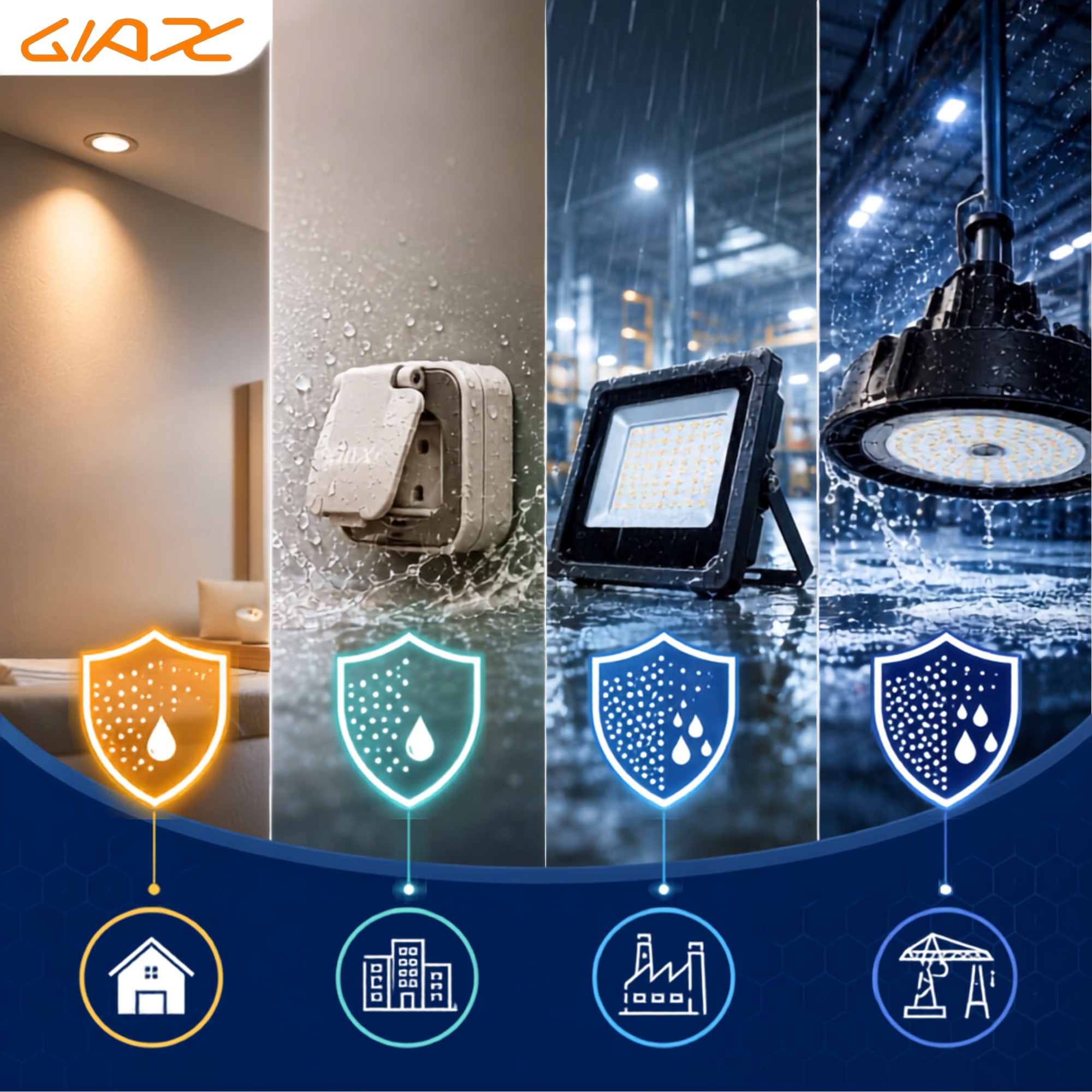
IP44 — Suitable for General Protected Applications
IP44 provides protection against solid objects larger than 1 mm and protection against splashing water from all directions.
It can be suitable for certain indoor and sheltered applications where exposure to dust and water is relatively limited.
Common applications may include:
- Indoor electrical accessories
- Sheltered outdoor areas
- Certain bathroom applications
- Covered installations
However, the actual suitability depends on the product and installation environment.
IP54 — Protection Against Dust and Splashing Water
IP54 offers a higher level of solid-particle protection than IP44.
It is dust protected & Protected against splashing water
This rating can be useful in environments where products may encounter moderate dust and occasional water splashes.
Common applications may include:
- Commercial spaces
- Workshops
- Industrial areas
- Electrical enclosures
- Semi-outdoor applications
IP65 — Dust-Tight and Protected Against Water Jets
IP65 provides significantly stronger protection.
This makes IP65 particularly useful for many outdoor and industrial applications where dust, rain or water jets may be present.
Common applications may include:
- Outdoor lighting
- Floodlights
- Industrial lighting
- Signage
- Warehouses
- Exterior electrical installations
IP66 — Dust-Tight and Protected Against Powerful Water Jets
IP66 provides the same dust-tight protection as IP65 but offers a higher level of protection against powerful water jets.
It can be considered for demanding environments where equipment may experience heavier water exposure.
Common applications may include:
- Industrial facilities
- Outdoor installations
- Harsh environments
- Industrial lighting
- Areas exposed to powerful water jets
Which IP Rating Should You Choose?
The right IP rating depends on where and how the product will be used.
For indoor areas
For a normal dry indoor environment, a very high IP rating may not always be necessary.
For bathrooms and moisture-prone areas
Consider products designed and rated appropriately for the specific location. The required protection can vary depending on how close the product is to water sources.
For outdoor areas
Products may be exposed to rain, dust and changing weather conditions. A higher IP rating such as IP65 or IP66 may be appropriate for many outdoor applications.
For industrial environments
Dust, moisture, cleaning processes and other environmental conditions can influence the required IP rating. Choosing the correct protection level is especially important for industrial electrical and lighting installations
Choose the Right Protection with GIAX
From lighting and electrical accessories to industrial and electrical solutions, choosing the right product starts with understanding the environment in which it will be installed.
At GIAX, our product portfolio brings together solutions designed for a wide range of residential, commercial and industrial applications.
Whether you're selecting lighting for an outdoor area, electrical accessories for a commercial project, or equipment for an industrial environment, understanding specifications such as IP ratings can help you make a more informed decision.
Need help choosing the right electrical or lighting solution for your application? Explore GIAX's product range or speak with our team.