phone: +974 4 409 5443 | 50024300
email: [email protected]
SHOP NUMBER 1,BUILDING NUMBER 2,BARWA VILLAGE,WAKRA

LED Downlights vs Spotlights: Which Lighting Solution is Right for Your Space?
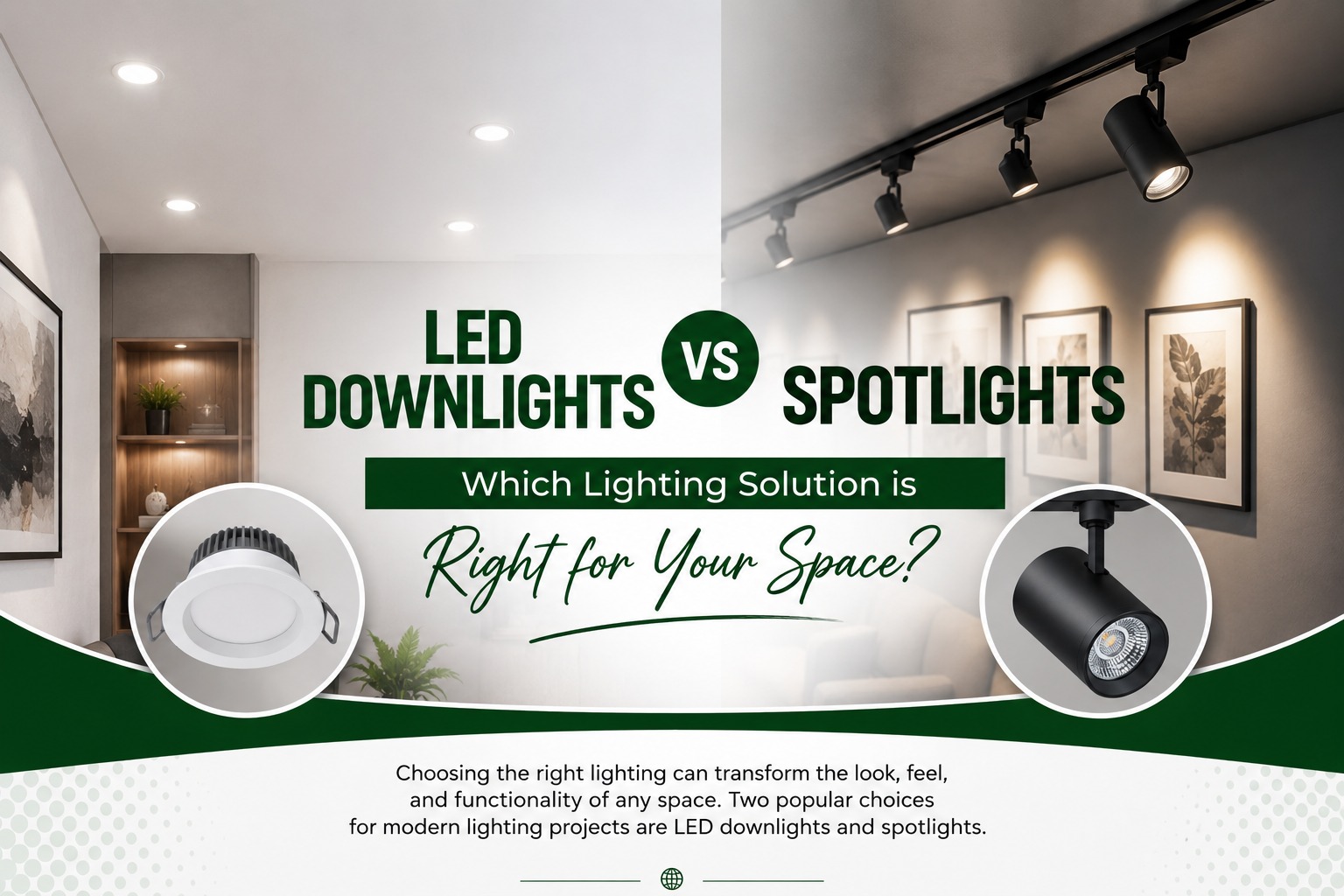
LED Downlights vs Spotlights: Which Lighting Solution is Right for Your Space?
Lighting plays an important role in the appearance, comfort, and functionality of any space. Whether you are designing a new home, renovating an office, or upgrading a retail store, choosing the right lighting can make a significant difference.
Among the most popular lighting options today are LED downlights and spotlights. While they may look similar at first glance, each serves a different purpose. Understanding the differences will help you make the right choice for your lighting project.
What Are LED Downlights?
LED downlights are recessed light fixtures installed into the ceiling. They provide a wide, even spread of light that illuminates an entire room without creating harsh shadows. Their sleek design makes them ideal for modern interiors.
LED downlights are widely used in:
- Living rooms
- Bedrooms
- Kitchens
- Offices
- Hotels
- Shopping malls
- Hospitals
- Commercial buildings
They offer clean aesthetics while delivering energy-efficient illumination.
What Are Spotlights?
Spotlights are designed to focus light on a specific object or area. Instead of illuminating an entire room, they create a concentrated beam that highlights particular features.
Spotlights are commonly used for:
- Artwork
- Decorative walls
- Display shelves
- Retail products
- Architectural details
- Outdoor landscape lighting
They are perfect when you want to draw attention to something.
LED Downlights vs Spotlights
| Feature | LED Downlights | Spotlights |
| Light Distribution | Wide and even | Narrow and focused |
| Primary Purpose | General room lighting | Accent and task lighting |
| Installation | Recessed into ceiling | Surface mounted or recessed |
| Best For | Homes, offices, commercial spaces | Display areas, artwork, feature walls |
| Beam Angle | Wide beam | Narrow beam |
| Visual Effect | Soft, uniform lighting | Dramatic highlighting |
Benefits of LED Downlights
Energy Efficient
Modern LED downlights consume significantly less electricity than traditional lighting while providing excellent brightness.
Long Lifespan
Quality LED downlights can last for thousands of hours, reducing replacement and maintenance costs.
Modern Appearance
Because they sit flush with the ceiling, LED downlights create a clean and elegant interior design.
Better Light Distribution
They spread light evenly throughout the room, making spaces feel brighter and more comfortable.
Low Heat Emission
LED technology generates less heat, improving safety and energy efficiency.
Benefits of Spotlights
Spotlights provide precise illumination where it is needed most. They are ideal for highlighting products in retail stores, creating mood lighting, showcasing artwork, and emphasizing architectural features.
Their adjustable beam direction makes them highly versatile for decorative lighting.
Which One Should You Choose?
Choose LED downlights if you need:
- General room lighting
- Modern ceiling aesthetics
- Energy-efficient everyday illumination
- Uniform brightness throughout the space
Choose spotlights if you need:
- Accent lighting
- Product highlighting
- Decorative lighting effects
- Focused illumination for specific areas
In many projects, combining both lighting types creates the best results. LED downlights provide overall brightness, while spotlights add depth and visual interest.
Why LED Downlights Are a Smart Investment
As homes and commercial spaces move toward energy-efficient lighting solutions, LED downlights continue to be one of the most popular choices. They reduce electricity bills, require minimal maintenance, and complement contemporary interior designs.
Whether you are lighting a home, office, hotel, showroom, or retail space, LED downlights deliver reliable performance and long-term value.
Find Premium LED Downlights
If you're looking for high-quality LED downlights for residential or commercial projects, explore LightingSouq's range of modern lighting solutions. From stylish recessed fixtures to energy-efficient lighting products, you'll find options designed for performance, durability, and elegant interiors.
Frequently Asked Questions
Are LED downlights better than spotlights?
LED downlights are better for general lighting, while spotlights are ideal for accent lighting. The right choice depends on your lighting requirements.
Can LED downlights be used in every room?
Yes. LED downlights are suitable for living rooms, bedrooms, kitchens, offices, retail stores, and commercial buildings.
Do LED downlights save electricity?
Yes. LED downlights consume significantly less power than conventional lighting while delivering excellent brightness.
Can LED downlights and spotlights be used together?
Absolutely. Many modern lighting designs combine LED downlights for ambient lighting with spotlights for highlighting decorative features.
Conclusion
Both LED downlights and spotlights have their own advantages. If your goal is comfortable, energy-efficient, and uniform lighting, LED downlights are the ideal solution. If you want to highlight artwork, products, or architectural details, spotlights are the better option.
For the best lighting results, many designers combine both to create spaces that are functional, attractive, and visually balanced.